Charles Village
Student life, colorful rowhouses, cafés, and everyday errands.
It is an archipelago of neighborhoods shaped by water, rail, industry, and reinvention.
Baltimore is compact enough to cross quickly, yet its history, architecture, and daily life can change in a handful of blocks.
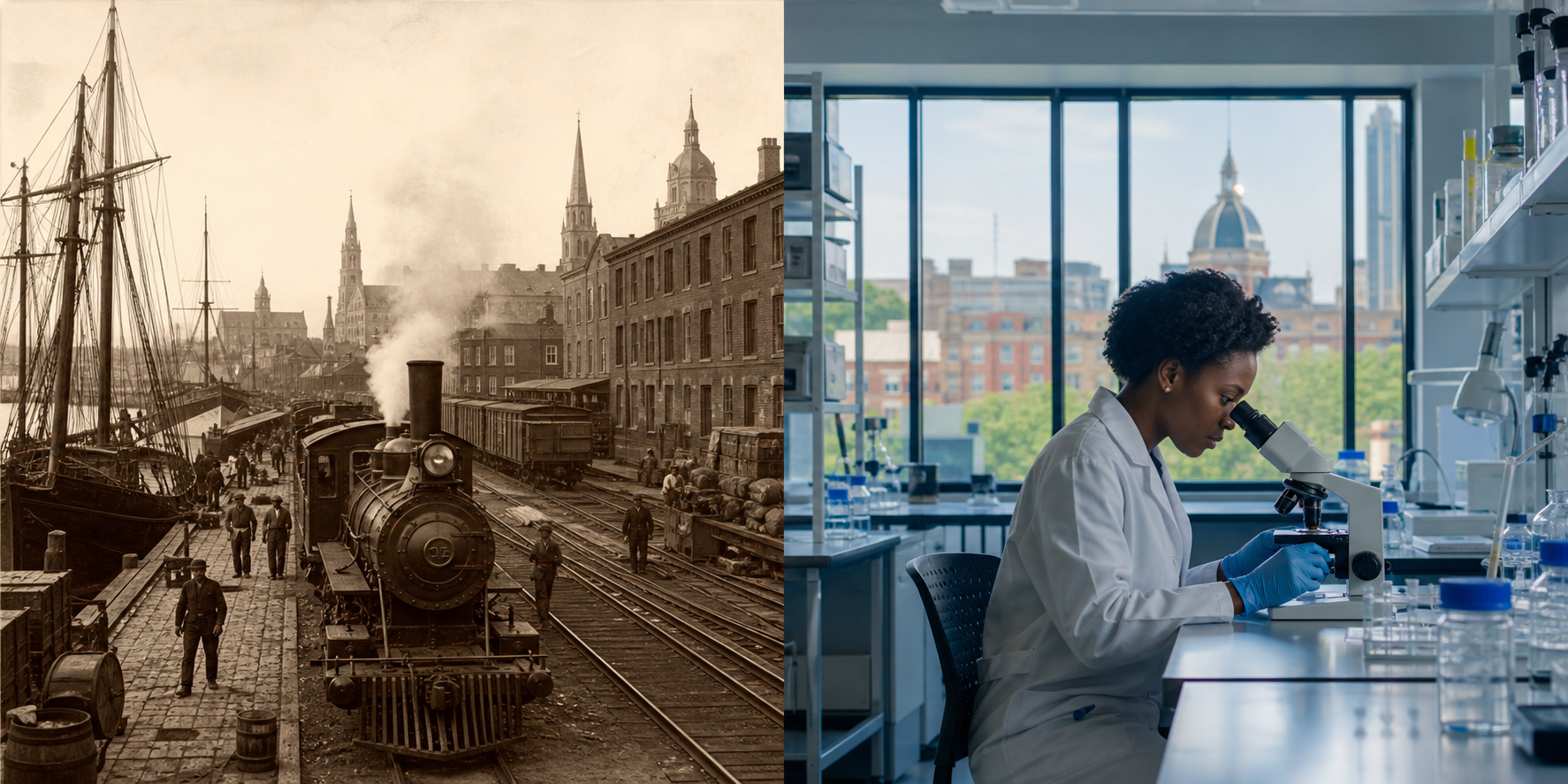
For nearly three centuries, Baltimore has been shaped by how people, goods, and ideas move.
Deep water made Baltimore a natural Atlantic gateway.
The B&O connected the harbor to markets farther west.
Manufacturing and maritime power drove a midcentury high.
Medicine, education, research, and logistics drive what comes next.
Port + railroad + manufacturing
Baltimore remains a national leader in moving automobiles and heavy equipment.
Homewood is your anchor, not the whole city.
Charles Village, Hampden, Remington, and Waverly form the first cluster to learn. Each is close. None feels interchangeable.
Student life, colorful rowhouses, cafés, and everyday errands.
Independent shops and Baltimore personality along 36th Street.
Saturday market, residential streets, and life beyond the campus bubble.
It gives you a useful north to south spine through the city.
Your starting point for classes, the BMA, and the northern neighborhoods.
Six stops. One much better mental map.
Use CharMar or Uni Mini for convenience. Save Target and Costco for occasional larger trips with friends.
It is the easiest choice for most domestic trips. Search Dulles too when you need broader international routes.
Amtrak runs directly to Washington, Philadelphia, New York, and Boston. MARC is the budget move to DC.
Citywide averages hide enormous local differences. Explore gradually, keep normal city awareness, and use familiar transit or rideshare late at night.
Every section from the original guide appears below in full, with its wording, sources, tables, and detail preserved.
Download the original textLoading the complete guide…